




The number every “default child” should remember before answering the next 2 a.m. call is this:
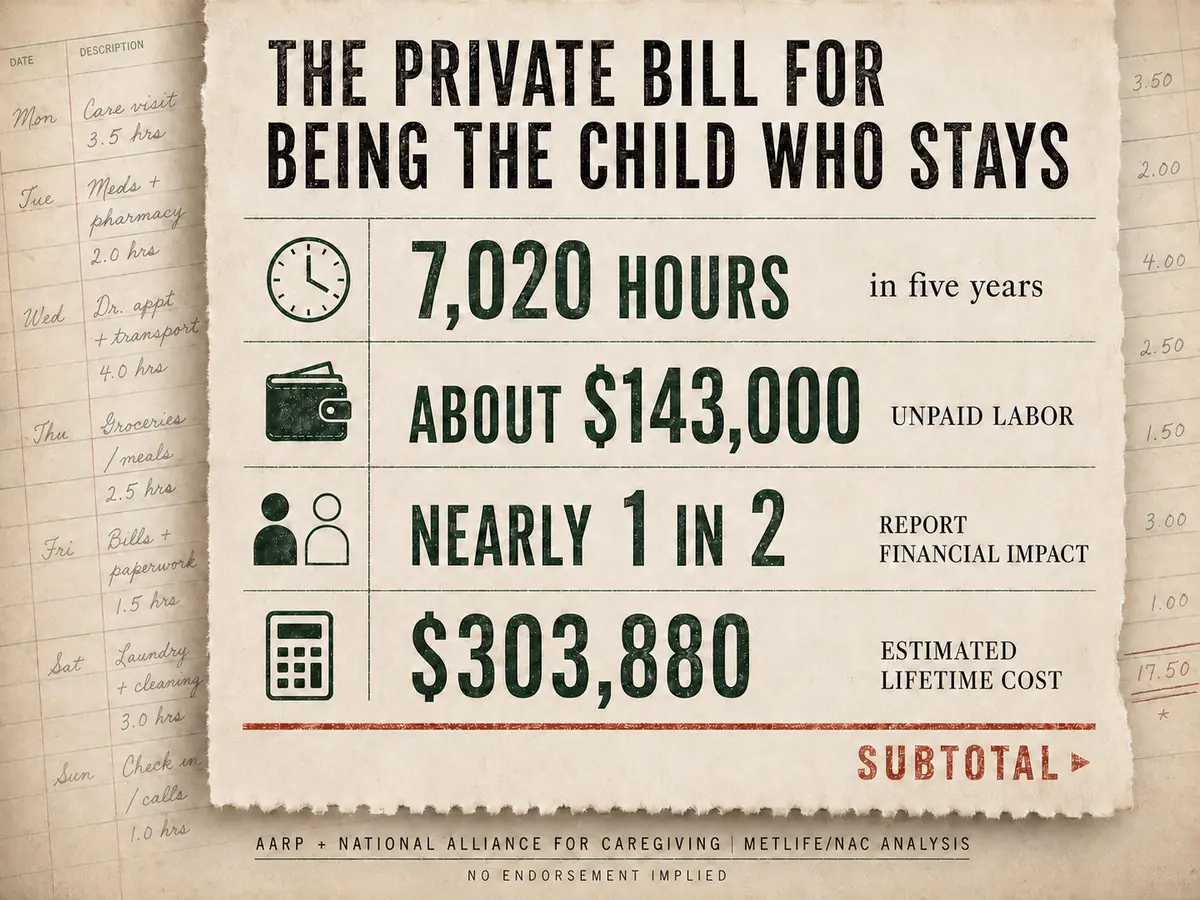
$303,880 gone—and retirement delayed 12 years.
That is what years of unpaid caregiving can erase from one adult child’s wages, Social Security and pension benefits.
The child doing the cleanup loses shifts, promotions and retirement contributions. Siblings who do not share the hands-on work keep those parts of their lives intact.
My name is Dr. Elaine Mercer. I am the geriatric-care specialist narrating this report.
I study the invisible workload that lands on one adult child when an aging parent can no longer manage alone.
The Family Drafts One Child Without Ever Taking a Vote
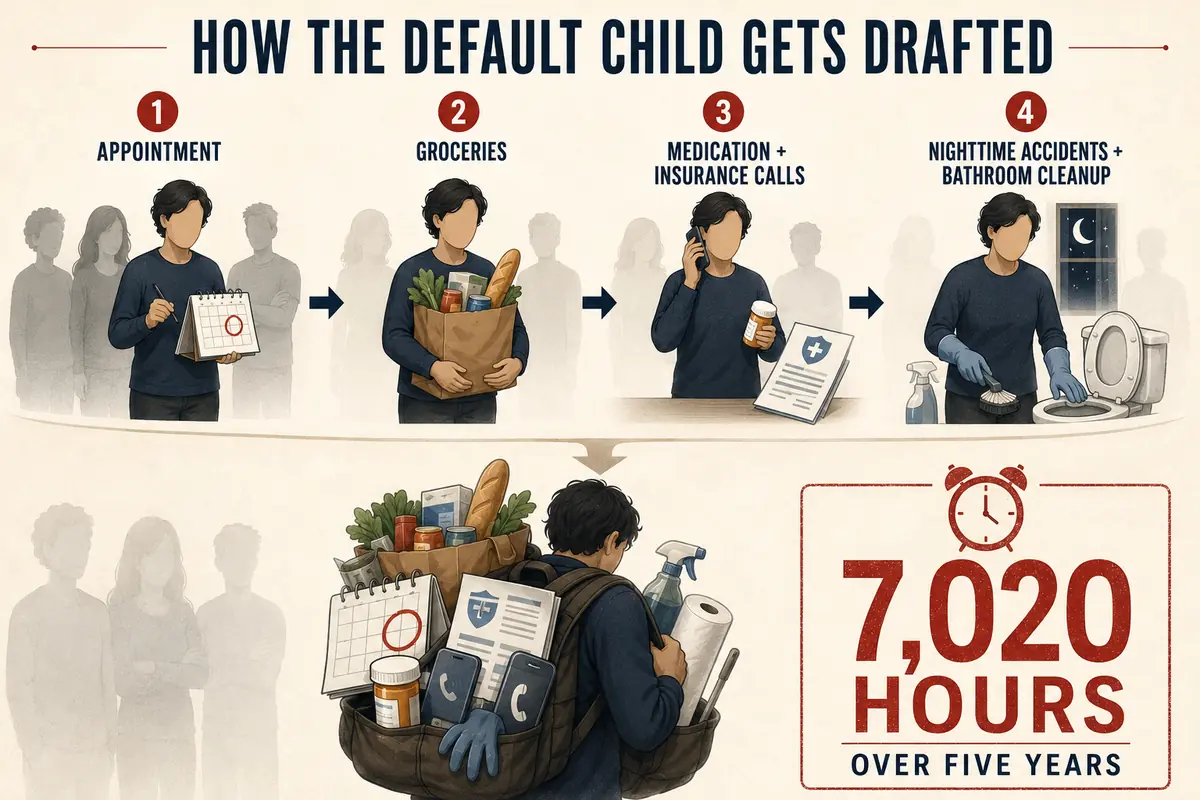
Call her Brenda.
At 58, she was still working while caring for her mother after a stroke and her father as Parkinson’s made everyday movements harder. She converted her downstairs room into a care space because she was the sibling who lived nearby.
At first, everyone promised to rotate weekends.
Then her brother’s son had soccer. Her sister’s drive was “too far.”
Another brother said he was not comfortable handling bathroom accidents.
Soon, the rotation disappeared. Brenda did not.
She changed sheets at 2:00 a.m. She cleaned walker wheels, the shower chair, the toilet base and whatever the mop left inside the grout. Then she washed her hands, reheated dinner and answered the next message asking for an update.
One Sunday, she sent a single sentence to the family group chat:
“I need one of you to clean the downstairs bathroom today.”
Nobody answered for eleven hours.
When her brother finally visited the next weekend, he pointed to one dark grout line and told Brenda the bathroom needed to stay cleaner “for Mom’s dignity.”
Then he left for golf.
Brenda’s mother lowered her eyes and whispered, “I’m sorry you have to do this alone.”
That sentence hit harder than the silence in the group chat.
Her mother had started experiencing her own care as the thing destroying the only child who stayed.
The Cost Is Not Just the Money Printed on a Receipt
The estimated $303,880 lifetime caregiver loss is not one giant bill. It leaks out quietly.
It is the shift Brenda cannot take. The promotion she cannot accept.
The retirement contribution she pauses. The Saturday she loses because a bathroom reset consumes the only open block in her week.
And the family does not see most of it because the bathroom looks normal when they arrive.
That clean room is evidence of labor they never had to watch.
Brenda could not force her siblings to become fair. But she could stop treating her body as the only piece of equipment available.
Stronger Cleaner Could Not Fix a Mechanical Problem
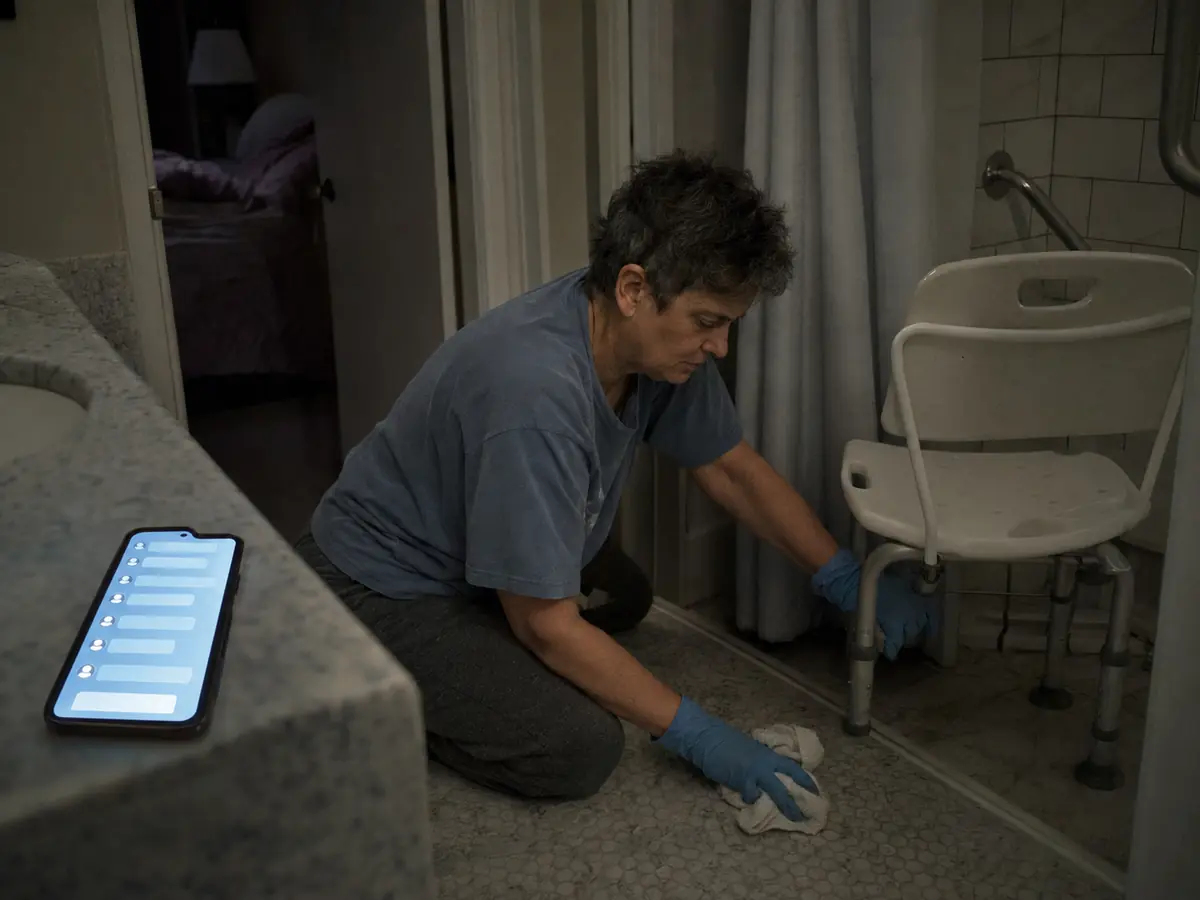
Brenda first tried to work faster with the tools already under the sink.
A mop covered the open floor but skipped the recessed grout and curved toilet base. Wipes handled flat surfaces but not mineral buildup.
Stronger sprays made the room smell harsher, but they did not create the friction needed to lift stuck grime.
A small hand brush could create that friction—but only if Brenda supplied everything.
Her back supplied the reach. Her knees supplied the position.
Her wrist supplied hundreds of strokes.
The cleaner was not doing the hardest work. Brenda was.
She stopped searching for another bottle and started searching for a way to change the physical setup of the job.
That is how she found the Sumoria ScrubForce Pro.
The Motor Does the Repetition. The Caregiver Directs It.
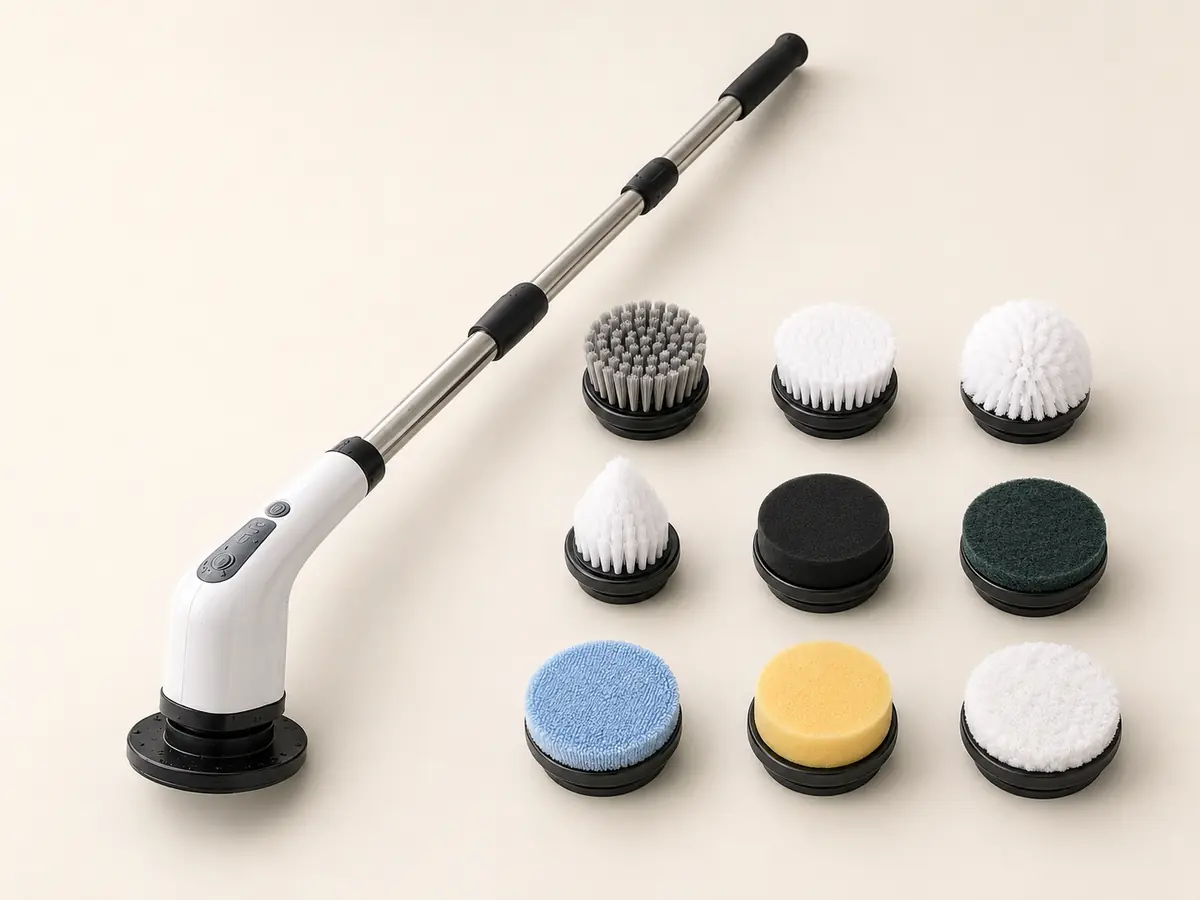
ScrubForce Pro is a cordless spin scrubber—a powered cleaning brush on an adjustable handle.
Think of the rapid circular motion of an electric toothbrush, scaled up for bathroom surfaces. The user places the correct attachment against the surface and guides it while the motor produces the repeated scrubbing motion.
That matters for a default child because it changes all three parts of the job that were consuming Brenda:
Reach: the extension handle carries the brush down to floors, tubs and toilet edges while she stays more upright.
Repetition: powered rotation replaces hundreds of hand-powered back-and-forth strokes.
Fit: nine attachments give her different shapes for broad tile, curved tubs and sinks, grout, corners, edges and tight detail areas.
For the next reset, Brenda used a broad head across the floor, changed to a smaller head around the pedestal and guided a narrow attachment along the grout.
She still handled visible material correctly. She still used suitable cleaners and followed disinfectant directions when needed.
But she did not lower herself onto both knees and become a human motor just to make one room acceptable.
It Stopped One Unfair Job From Consuming Her Body.
Brenda’s siblings did not take over the lost shifts or weekend cleanups. She still carried the unpaid workload.
But the bathroom stopped taking as much from the child already giving the most.
After one Saturday cleanup, Brenda checked on her parents and sat on her porch with a hot cup of coffee. She had postponed that small ritual for three weekends because the downstairs bathroom kept consuming the afternoon.
You may not be able to stop your family from calling you “the strong one.” But you can stop letting that compliment turn your body into the family’s cleaning equipment.
The urgency is the math of repetition. Every week you wait can contain another accident, another hour on the floor and another piece of your own life handed to a job nobody else volunteered to do.
The equipment switch caregivers are making
See Why Caregivers Are Switching to ScrubForce Pro
✓ Opens the official Sumoria page for family caregivers.
How I Secured the Official Link for Caregivers
While examining powered-cleaning equipment, I spoke with a housekeeping operations contact who had worked at a major Las Vegas resort. She described the industrial version of this cleaning approach—the equipment her crews used to reset heavily used resort bathrooms in as little as eight minutes.
Eight minutes for a bathroom that could otherwise become a long, exhausting cleanup.
Her teams proved what the right equipment changes: long reach, powered rotation and a cleaning head matched to the surface move repeated scrubbing out of the caregiver’s hands and into the tool.
When I asked what family caregivers could buy, she gave me the official Sumoria link for the consumer ScrubForce Pro. I secured that direct access below so readers can go straight to the same cleaning system without wasting another dollar on weak look-alikes.
The current offer is $89 for one ScrubForce Pro, or $148 for two—$74 each. One can stay in the caregiver’s home; the second can stay where the person receiving care lives.
Protect the person doing the caring
Stop Doing the Hardest Part by Hand
Put powered reach and rotation between your body and the bathroom floor.
✓ Use the official Sumoria page to secure the current caregiver offer.
SEE IT HANDLE THE HARD PARTS
Watch What Long Reach and Powered Rotation Change
These are the bathroom areas that usually force caregivers to bend, kneel or scrub by hand. Watch the tool carry the repeated motion instead.
CAREGIVER EXPERIENCES
What Caregivers Who Finally Stopped Scrubbing by Hand Say
Different objections. One practical realization: the caregiver's body should not be the cleaning tool.
“My sisters still send advice from three states away while I handle Dad’s bathroom. The ScrubForce Pro stopped their absence from costing me another Saturday on my knees. I can clean around the toilet, shower chair and tub standing up, then get back to being Dad’s son instead of the family’s unpaid janitor.”
— Daniel R.Family caregiver
“I already owned two bargain spin scrubbers. One stalled the second it touched grout; the other died after three charges. This one actually keeps turning when I apply pressure, and the corner head reaches the toilet base the cheap ones missed. I finally threw the dead gadgets out instead of buying a fourth disappointment.”
— Priya S.Family caregiver
“I was worried a long powered scrubber would feel heavy or complicated because my shoulder is already worn out from helping Mom. It took me minutes to assemble, the controls are simple, and I guide the head instead of forcing a hand brush back and forth. The biggest difference is finishing without that burning shoulder feeling.”
— Marcus T.Family caregiver
“I hesitated at the price because caregiving was already draining my savings. Then I compared it with one missed shift, one cleaning visit, and the three useless tools I had already bought. I ordered because the return policy lowered the risk. I kept it because I use it every week—and because getting part of my weekend back is worth more than another cheap brush.”
— Alex M.Family caregiver
THE NEXT CLEANUP WILL NOT WAIT
You’ve Seen the Objections. Now Protect the Person Doing the Work.
✓ Use the official Sumoria page to secure the current caregiver offer.